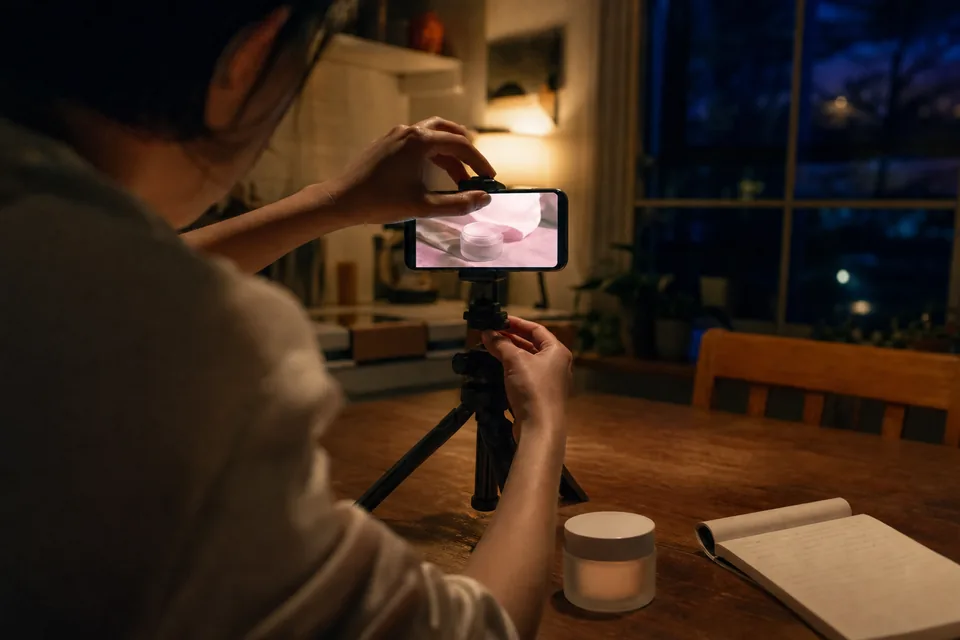
Organic usage and paid usage are different licences
Organic usage means posting the video on your own channels without ad spend behind it: your TikTok profile, your Instagram feed and Reels, your website, a product page or an email. Most creators treat this as the base licence.
Paid usage means putting money behind the video as an advertisement: a TikTok in-feed ad, a Meta ad in Reels, Stories or Feed, a YouTube Shorts ad, or a sponsored product video on a marketplace. Paid usage is worth more to the brand, because the video reaches people who never followed you, so creators usually price it higher.
The most common mistake is buying an organic licence, watching the post do well and then boosting it. Boosting a post is paid usage. If your agreement does not cover it, you need a new licence before you spend.
- Organic covers your own pages, site and email, with no spend behind the video.
- Paid covers ads on platforms where you pay for reach.
- Some agreements separate platforms, so a TikTok licence may not cover Meta.
- Some agreements separate formats, so a licence for the edited video may not cover cut-downs or new hooks.
How long you may run the video
Usage rights usually come with a time limit: 30 days, 90 days, 6 months, 12 months or perpetual. When the period ends, you are expected to stop running the ad, and in some agreements to remove the organic post as well.
Duration matters most for winning ads. A creative that keeps converting can run for many months, and a short licence forces you to renegotiate at exactly the moment the video is most valuable to you. Before you sign, decide how you will handle a winner: extend at a set price, or buy a long licence from the start.
- Check whether the period starts on delivery or on first use.
- Check whether an extension price is fixed in the agreement.
- Check what happens to running ads on the last day of the period.
- Keep the agreement and the delivery date together with the files, so anyone on your team can check them.
Whitelisting, Spark Ads codes and partnership ads
Whitelisting means running an ad from the creator's handle instead of your brand page. The ad shows the creator's name and profile picture, which reads as a recommendation rather than a brand message. Platforms have their own mechanics for it.
On TikTok, the creator generates a Spark Ads authorization code for a specific post and sends it to you. You enter the code in your ads account, choose the authorization period the creator allowed, and run the post as an ad with their handle, likes and comments attached. When the authorization expires, the ad stops.
On Meta, partnership ads (formerly branded content ads) connect the creator's account and your brand account. The creator approves the partnership in their settings, and the ad can show both names. Access can be granted for a set period and withdrawn by the creator.
Whitelisting needs ongoing cooperation from the creator, so it is usually priced as a separate add-on and agreed post by post. It is not the same as paid usage: you can run a creator video as a paid ad from your own brand page without any whitelisting at all. For TikTok-specific mechanics, see our page on tiktok ugc ads, and for Meta placements see ugc facebook ads.
Why raw footage is part of the rights question
The edited video is one combination of hook, body and call to action. Raw footage is every take the creator filmed: alternative openings, extra product shots, reactions and b-roll. With raw files, your own editor can build new hooks, shorter cut-downs and fresh variants months later without a new shoot.
Many creators license raw footage separately, and some do not release it at all. Ask two questions: are raw files delivered, and does the usage licence cover new edits made from them? A licence for "the video" may not extend to a recut.
What every UgcVids plan includes
We keep the licence simple, so you never negotiate rights per video.
- Paid ads usage on all platforms is included in every plan, from Starter to Studio, with no separate licensing fee. You can run the videos as ads on TikTok, Instagram, Facebook, YouTube Shorts and other paid placements from your brand accounts.
- Organic usage on your own channels, website, product pages and email is included as well.
- Raw footage is included on Scale and Studio, so your team can cut new versions from the same shoot.
- A/B variants, alternate hooks and calls to action cut from the same footage, are included from Growth upward and fall under the same licence.
- Creators are paid for every video and disclose the paid partnership as the FTC requires when the content appears with their name.
- Whitelisting and Spark Ads codes depend on the individual creator agreeing to authorize their own post. You request it in the order panel, and we tell you in writing whether the matched creator accepts and for how long.
The details of the licence are in our terms. If you are still choosing a format, our guide to types of ugc videos helps decide what to order first.
Questions to settle before any creator video goes live
Write the answers down and store them next to the files. It saves time when a video becomes a winner or a platform asks for proof of permission.
- Is the video cleared for organic use, paid use, or both?
- Which platforms and placements does the licence cover?
- How long does the licence last, and from which date?
- Is whitelisting or a Spark Ads code allowed, and for what period?
- Are raw files included, and may you edit new versions from them?
- Does the creator disclose the paid partnership where the content runs under their name?
- Who keeps the signed agreement and the delivery record?
Not legal advice
This article explains common industry practice in general terms. It is not legal advice and does not replace reading the agreement that applies to your videos. Licence terms, disclosure rules and platform policies change and differ between countries, so check the current rules of each platform and, for unusual use such as TV or outdoor advertising, ask a lawyer.